Showing posts with label peak oil. Show all posts

Monday, June 6, 2011

Planning for a Future That Will Not Exist

(source)

I was flipping through my journal earlier, and came across the following entry from January 4, 2007:
My critique of planning is this: it is no good at preparing for the uncertain future. It takes current events and extrapolates. And extrapolation is taking the crazy-curved line of our past reality and making it seem straight — then projecting that false history into the future. The problem with planning is that it doesn't plan for anything interesting! At best it assumes that the next 30 years will be like the past 30 — only better. Who's planning for global eco-collapse? Global warming? The collapse of national and global economic systems, global and national food networks? Who's planning for peak oil? Who's planning for our transition into an entirely new Earth? Who is planning for a graceful exit for us?
For those that don't know, I am employed as a professional planner for local government. I wrote this during winter break before my final semester at grad school. I earned my Master of Science in Urban & Regional Planning in August 2007. Four years later, this critique still holds. Most planners have no idea what's actually happening in the world. They have no clue of the gravity of our collective situation. They still plan by projecting the past into the future. Worse, they assume the past few years are but a blip, an outlier that will be quickly forgotten once "the recovery" takes hold. If they had a longer perspective, they might realize that it's not just the past four years, but actually the past 60 (post-war) or past 150 (since the first oil well was drilled) years that are the true outliers.

Sunday, May 15, 2011

More Drilling?

As our illustrious President continues to call for more drilling, including the streamlining of drilling permits in Alaska and areas of the Gulf that had been under a temporary drilling moratorium, the obvious question (other than "wtf?!") to us Lancastrians is "what does this mean for us?"

I am, of course, not implying that nothing matters outside our rather arbitrary political boundaries. But, you know -- what's it mean locally?

Well, first, it means we can't count on any President, whether they've got an '-R' or a '-D' after their names, to have a responsible energy policy. The best they can do is rehash old ways of hoovering up our limited resources and depositing them into the hands of a tiny elite. Oh well.

It means oil & gas prices will continue to go up, since no amount of domestic drilling will put even the tiniest downward pressure on prices. This also means food prices will go up, since the price of food is intimately linked to the price of oil.

Ouch.

For those who are paying attention, energy and food inflation makes up over half of total price inflation these days.

Since Lancaster is not a net producer of oil (even counting all those gallons of used fryer oil you're putting in your diesel-powered VW -- you know who you are!), this means we will continue to be at the mercy of the oil-producing world... that is, so long as we rely on a far-away political elite to decide our destiny. Time for us to choose our own fate. Continue to play the zero sum geo-political oil game, or Transition consciously to a better way? A local way?

So far as energy goes, we have two options vis-à-vis our crippling oil addiction: (1) we can conserve, conserve, conserve; and (2) we can transition to harnessing local energy supplies.

I'd be interested in your ideas on how we can achieve each. This is what Transition is all about!

Monday, May 9, 2011

Weekly Roundup

Weekly roundup of all the articles that have been littering my web browser (Firefox 4, of course) the past week or so....

City Schools to Host Local Produce Markets

Good job, Harry! Our very own Harry Edwards, city resident and organic farmer in the New Holland area, first to step up.

Raspberries, cantaloupes, arugula, artichokes and peppers are coming to the parking lots of city schools this summer.
Farmers will be selling fresh produce in neighborhoods that don't have easy access to it, in a push to promote healthy eating here.
Lancaster city, Lancaster General Health and Lighten Up Lancaster have joined forces on the project.
The project was sparked last year when Washington Elementary School, on South Ann Street, asked a farmer to sell produce to students' families. Neighborhood residents started showing up to buy the fruits and vegetables.
Local health officials saw a need, saying parts of the city are "food deserts," areas devoid of supermarkets and affordable, fresh foods.
Renewables Can Outstrip Demand

While the cost to do this may be $12.3 trillion over 20 years, the cost of not doing anything is tremendously higher. One estimate of the cost to "adapt" (read: "suffer") is over $1.2 quadrillion. Spend now, spend less.


Wind and solar power are among six renewable energy options that have the potential to outstrip total world energy needs and may grow as much as 20-fold over the next four decades, a draft United Nations report said.
Geothermal, biomass, solar, wind, hydropower and electricity from the ocean’s waves and tides could more than meet the global energy needs for power, heating and transport based on 2008 demand, according to the study by the UN’s Intergovernmental Panel on Climate Change, or IPCC.
In practice, less than 2.5 percent of that potential will be used, the panel said, basing the finding on four scenarios out of 164 examined in the UN’s biggest assessment of alternative energy. A shift to low-carbon energy will require a global investment of as much as $12.3 trillion by 2030, it said.
Wherefore the Cost of Power?

US electricity prices are low by world standards. One reason? We reward people for wasting energy. Elsewhere, the price per kilowatt-hour (kWh) increases the more you use. Here it drops. Other nations also tax energy more, and then use the money to implement smart policies, such as increasing efficiency and fostering renewable energy supply. Here? We subsidize the dirtiest fuels at six times the rate of clean energy.


We often talk about electric rates as if the only thing that goes into determining them is the power source.  In some sense, this is right:  If a utility’s power costs go up, and nothing else changes, the price they charge consumers will likely eventually go up.
But, this understanding doesn’t fully appreciate the role of rate design in determining what the rate will be.  When utilities – and utility regulators – design an electricity rate, they make numerous decisions that impact the price that consumers will ultimately pay, regardless of power source.  Ignoring these other decisions can lead to lazy thinking about rate impacts, which can ultimately lead to poor decision making.

The Transition US Daily

A new online paper sponsored by Transition US.

China to Exploit Shale Gas

Ouch. There goes the water supply of over a billion people? I find it pretty interesting that they're estimating 30 years' worth of shale gas in the US alone, as if that somehow means we don't need to think about energy policy for that period of time. 30 years is not that long. And in the meanwhile, of course, we'll have trashed our water supplies, our forests, and the atmosphere. And note the paragraph about exporting US shale gas. Energy independence what?

Global reserves of shale gas.
YUANBA, China, April 20 (Reuters) - China has spent tens of billions of dollars buying into energy resources from Africa to Latin America to slake the unquenched thirst for fuel from its growing industry and burgeoning cities.
But China may have more energy riches under its own soil than policy makers in the world's second-largest economy ever dared imagine.
Just over a year ago, Beijing awakened to a technology revolution that has unlocked massive reserves of gas trapped within shale rock formations in the United States.
Once deemed too costly to extract, shale gas has turned around U.S. dependence on foreign gas imports. Just a few years ago, the United States was building scores of expensive facilities to import liquefied natural gas (LNG), looking at booming long-term demand forecasts and wondering which countries would supply the huge volume of imports it needed.
Instead, the United States is turning import facilities into export terminals, because its shale gas reserves are estimated to be big enough to meet domestic demand for 30 years. This is an American dream that China wants to emulate.
"America's shale gas production alone has exceeded that of total Chinese gas output. That gives us a lot of confidence," said Zhang Dawei, deputy director of the Strategic Research Centre for Oil and Gas in the Ministry of Land and Resources (MLR).
China's confidence has been bolstered by a new report of its estimated reserves of shale gas, which shows them to be, by far, the largest in the world.
The U.S. Energy Information Agency in a report last month estimates China holds 36.1 trillion cubic metres (1,275 trillion cubic feet) of technically recoverable shale gas reserves -- significantly higher than the 24.4 tcm (862 trillion cubic feet) in the United States, which has the second-most.
Industry estimates in China peg shale gas resources slightly lower -- but still huge -- at 26 trillion cubic metres (tcm), although they have yet to give their own forecasts of how much of that is recoverable.
Maryland to Sue Chesapeake Energy for PA Fracking Blowout

Mmmm.
On April 19, a natural gas hydrofracturing well owned by Chesapeake Energy in Bradford County, PA suffered a blowout.  It spewed “thousands and thousands of gallons of frack fluid over containment walls, through fields, personal property and farms, even where cattle continue to graze.” Brad Johnson has the story of the aftermath.
The spill drained into the Susquehanna River watershed, which feeds Maryland’s Chesapeake Bay. Maryland’s Attorney General Douglas F. Gansler now “plans to sue the company for violating federal anti-pollution laws” including the Resource Conservation and Recovery Act (RCRA) and the Clean Water Act (CWA), as a press release issued yesterday explains:
On April 19, thousands of gallons of fracking fluids were released from a well owned and operated by Chesapeake Energy into Towanda Creek, a tributary of the Susquehanna River, which supplies 45% of the fresh water in the Chesapeake Bay. In his letter, Attorney General Gansler notified the company that at the close of the required 90-day notice period, the State intends to file a citizen suit and seek injunctive relief and civil penalties under RCRA for solid or hazardous waste contamination of soils and ground waters, and the surface waters and sediments of Towanda Creek and the Susquehanna River. The State also intends to seek injunctive relief and civil penalties under the CWA for violation of the CWA’s prohibition on unpermitted pollution to waters of the United States.
“Companies cannot expose citizens to dangerous chemicals that pose serious health risks to the environment and to public health,” said Gansler in the press release. “We are using all resources available to hold Chesapeake Energy accountable for its actions.”
Wake Up! The Days of Abundant Resources and Falling Prices Are Over Forever
So says Jeremy Grantham, self-described "die-hard contrarian" and hedge fund manager

Summary of the Summary
The world is using up its natural resources at an alarming rate, and this has caused a permanent shift in their value.  We all need to adjust our behavior to this new environment. It would help if we did it quickly.
Summary
  • Until about 1800, our species had no safety margin and lived, like other animals, up to the limit of the food supply, ebbing and fl owing in population.
  • From about 1800 on the use of hydrocarbons allowed for an explosion in energy use, in food supply, and, through the creation of surpluses, a dramatic increase in wealth and scientifi c progress.
  • Since 1800, the population has surged from 800 million to 7 billion, on its way to an estimated 8 billion, at minimum.
  • The rise in population, the ten-fold increase in wealth in developed countries, and the current explosive growth in developing countries have eaten rapidly into our fi nite resources of hydrocarbons and metals, fertilizer, available land, and water.
  • Now, despite a massive increase in fertilizer use, the growth in crop yields per acre has declined from 3.5% in the 1960s to 1.2% today. There is little productive new land to bring on and, as people get richer, they eat more grain-intensive meat. Because the population continues to grow at over 1%, there is little safety margin.
  • The problems of compounding growth in the face of fi nite resources are not easily understood by optimistic, short-term-oriented, and relatively innumerate humans (especially the political variety).
  • The fact is that no compound growth is sustainable. If we maintain our desperate focus on growth, we will run out of everything and crash. We must substitute qualitative growth for quantitative growth.
  • But Mrs. Market is helping, and right now she is sending us the Mother of all price signals. The prices of all important commodities except oil declined for 100 years until 2002, by an average of 70%. From 2002 until now, this entire decline was erased by a bigger price surge than occurred during World War II.
  • Statistically, most commodities are now so far away from their former downward trend that it makes it very probable that the old trend has changed – that there is in fact a Paradigm Shift – perhaps the most important economic event since the Industrial Revolution.
  • Climate change is associated with weather instability, but the last year was exceptionally bad. Near term it will surely get less bad.
[JR:  Well, it may get less bad, but not "surely." This year is pretty extreme already and 2012 could be as bad or worse than 2010, according to Hansen here.]
  • Excellent long-term investment opportunities in resources and resource efficiency are compromised by the high chance of an improvement in weather next year and by the possibility that China may stumble.
  • From now on, price pressure and shortages of resources will be a permanent feature of our lives. This will increasingly slow down the growth rate of the developed and developing world and put a severe burden on poor countries.
We all need to develop serious resource plans, particularly energy policies. There is little time to waste.

Thursday, February 24, 2011

What Should We Do?

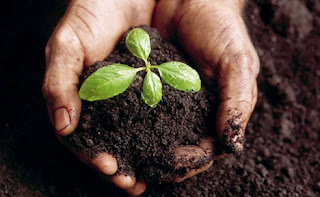
Soil-building is one of the answers.
There will be no great leader, this time.

Many have commented that a mass mobilization, on the scale of World War II, is what we need, right now, to prepare for peak oil and preserve a habitable climate and biosphere. There are a number of logical and practical issues with this notion.

First, no one in a position to be a leader -- say, the President, a member of Congress, a Governor, a respected (hah) national news correspondent -- has shown either (a) any understanding of the magnitude of the crises we face or (b) any inclination to be an actual leader on these issues. Instead, we get nonsensical screeds on American "exceptionalism," which I must put in quotation marks due to the fact of its not being either a word or a remotely coherent idea.

Second, the analysis of some very intelligent and thoughtful people (see, e.g., the Hirsch Report) has shown that we would need a WWII-scale mobilization twenty years in advance of oil peaking to successfully avert a peak oil-based global economic and political collapse. Since peak crude oil was five years ago, in 2006, and we are now at the final edge of the "undulating plateau" of oil production, this opportunity was lost nearly 25 years ago.

Third, we have already left the geologic epoch known as the Holocene (from holos = whole, and cene = new; thus: wholly new), which began about 11,700 years ago, and during which we had the steady, stable climate which permitted human civilization to develop for the first time on Earth (anatomically modern Homo sapiens first appeared over 200,000 years ago, and behaviorally-modern humans first appeared about 50,000 years ago). The Holocene is over; we have now entered what geologist call the Anthropocene (from anthropo = human), an epoch characterized by the global extent and impact of human activities on the Earth. This new epoch will be distinguished by (among other things) an increasingly chaotic climatic system, leading to regional and possibly global food shortages, the inundation of human settlements by rising flood waters, continent-sized Dust Bowls in North America and elsewhere, tens or hundreds of millions of environmental refugees, political and economic collapse, regional unrest, disruptions in the shipment of vital materials (such as food, energy, minerals), etc.

(source)
As an aside, I will note that part of the reason for this chaotic climate change is that we have already blown past the global carbon budget by at least 40, if not 90, parts per million (ppm). Present concentrations of CO2 in the atmosphere stand at about 390ppm. For at least the past 400,000 years, those levels never went much over 300ppm, and the current rate of increase (2ppm / year) is about 10,000 times the natural rate. Just as with our oil addiction, we have missed our deadline for keeping atmospheric carbon at safe levels by over 20 years.

In other words, in almost ever sense, we have overshot. Too many people consuming too many resources dumping too much pollution and waste into a finite global ecosystem. Every year in which we continue to add carbon to the atmosphere, just as every year in which we fail to ween ourselves off of our oil and lifestyle addiction, is another year in which are digging our own collective grave.

Cheerful, huh?

As I said above, and for the reasons already outlined (plus many more besides), don't expect any person purporting to represent that entity known as the United States (or most any other "nation-state") to take any proactive steps on these issues. Don't expect anyone to exhort you, or your neighbors, to take up any great national cause that might effectively meet these foolishly self-imposed threats. You've got no one but yourself, as hard as that sounds. At most, you've got your immediate geographic community; hopefully, that community is organizing, as Lancaster is, around a Transition movement that recognizes the present importance of these issues, and is seeking ways to meet them positively.

So, you've read the above and you agree on the three following propositions: (1) we are in for some hard times ahead, (2) no one is going to help us but ourselves and maybe our friends, and (3) we need to start working now. So what do we actually do?

The bottom pyramid doesn't look terribly stable, does it?
There are very few things I know for sure on this subject, but thanks to some pretty clear statistics this is one of them: start growing your own food. As I showed in a presentation on October 24, 2009 (the 350.org Global Day of Action and Eastern Market's first annual Green Fest), the United States has a woefully inadequate supply of farmers right now. Over 170 years ago, in 1840, before the advent of industrialism and widespread use of fossil fuels, the world had a basically solar-powered economy. The sun shown, grass and trees grew, and humans and animals ate food that had been cultivated with human and animal labor in a basically (though not entirely) closed-loop system whose driving energy source was the sun. At that time, 69% of the population of the USA, or 11.7 million people (out of 17 million), was directly involved in farming. In 2008, nationally, that percentage was below 0.62%, or 1.9 out of 304 million. In other words, we had more farmers in 1840 than we have now. Since it is pretty clear to most observers that this extraordinary feat has been made possibly by basically free energy, in the form of coal, oil, and natural gas, it becomes clear that one of the pressing needs we will feel as that free energy disappears is for more farmers -- and farm animals -- to directly work the land.

As a supporting statistic, I will note that, for every one calorie of food you consume, approximately 10 calories of fossil fuel-based energy (primarily oil and natural gas) was required as an input. Or, to put it another way, Americans consume, on average, about 400 gallons of gasoline-equivalent annually to produce our food. It also turns out that a barrel of oil is worth about 11.3 person-years of labor. The amount of energy we shovel into the US food system is thus equivalent to about 33 billion person-years of labor (or nearly 5x the population of Earth -- just to feed the USA). If that sounds like a lot, you're right.

Left: nutrient-poor oxisol. Right: an oxisol transformed into fertile terra preta using biochar. (source)

All is not lost! The first step in solving your problem, as they say, is recognizing that you have one. Well, we can check that step off the list. Step two is knowing where you need to get. Well, I would say, in the context of this post, "where we need to get" is a place that has a sustainable food supply, which means we need more farmers working the land directly with the help of domesticated animals and very little, if any, fossil fuels. This will mean, among other things, much smaller farms; but that's ok and even good, because it has been shown that small farms produce more food per acre than large farms. We also need to reduce and then stop emissions of greenhouse gases into the atmosphere, and then move to start taking carbon out of the atmosphere (to get from 390ppm CO2 to under 350ppm). Well, damn! Our idea of de-urbanizing and putting more people back on the land as farmers will also help with that as well, as it has been shown that good stewardship of the land and husbandry of animals can actually build topsoil, which means that small farms could actually become carbon sinks rather than carbon sources (topsoil is a reservoir of carbon), especially if they make use of biochar. Might we actually see a return to a stable climate? Well, not in your lifetime, but maybe in your grandchildren's. We need to take the long view on this one. After all, it has taken well over a century to utterly erode the Earth's life-support systems, and it'll probably take much longer than that to restore them. And restoration ought to be our mission.

How likely is all this? Not very, if you're waiting for someone on high to tell you to do it. Doubly unlikely, if you think you can sit idly by doing what you've always done while waiting for your neighbor to take care of all the hard work. Nevertheless, it is possible. If step one is recognizing the problem, and step two is having a vision for the future, then step three is getting there (or maybe having a plan for getting there, followed by getting there, if you are a planner like me).

So how will we get there? What will you do? I look forward to your thoughts.

Monday, December 6, 2010

Both Damned and Saved; or, The Inner Transition

I hope not. (source)
There are many types of transition we must go through to reach the better world we all believe -- or want to believe -- is out there. I consistently return to the conclusion that the most important, most fundamental transition, is the internal (psychological) one. Using less energy, walking and bicycling instead of driving, eating locally and more efficiently (i.e., having a higher vegetable/meat ratio), reducing waste, and composting (etc.) are all important, yet they're all insufficient. Completely. Even all together, they will not even come close to sufficing in the face of everything we know is happening in the world. To me, the true value in these actions lies not in the actions themselves, but in the mindsets or worldviews these actions help to foster. Riding a bicycle, while valuable as a money-saving, pollution-avoiding and health-promoting endeavor, to me finds its true worth in re-introducing us to the joy of using our own bodies and the beauty of the changing seasons -- and to the understanding that the fundamental crime of driving a motorized vehicle is its quiet theft of these experiences from us. It's theft, in essence, of our humanity.

When you know the joy of bicycling, the inner tranquility that a healthy diet promotes, the satisfaction of a near-empty garbage can, you begin to realize how unnecessary are so many modern "conveniences". Not just unnecessary, but actively obstructionist towards a fulfilling life. And that is when Transition becomes truly possible.

Part of the transition is facing up to very difficult facts. In an ideal world, we would have no urgency and could simply amble along the road towards a better world for the simple fact we saw it as a better world. But in the world as it is, we must, in fact, run towards this better world because the one we're leaving behind is crumbling, and threatening to take us with it. I speak, of course, of the twin drivers of the Transition Towns Movement: peak oil and climate change (with a dash of economic crisis thrown in for fun).

This particular post derives much of its motivation from two forces: a speech by Mari Margil of the PA-based Community Environmental Legal Defense Fund (CELDF) on the harsh reality of the state of the global biosphere, as well as a recent special issue of the Royal Society (the world's first scientific body) on the effects of a mere 4°C (7.2°F) of global warming, which could happen as early as 2060. As a practicing planner with an undergrad degree in math and physics, I am well aware of (a) the stark scientific case for why we're all (almost) screwed and (b) the pathetic political case for why (almost) nothing can be done about it. In a fit of depression, I wrote a short, sarcasm-rich version of this post which I have since deleted. I had made the cardinal sin of forgetting to look at things holistically -- looking only at our collapsing biosphere, I had forgotten about peak oil! You see, most of the worst-case scenarios with respect to climate change and global ocean death require something called "business-as-usual" emissions, which rely on a business-as-usual economy. Thank God for peak oil! Without growing oil consumption, the economy can't grow, and without a growing economy, emissions can't grow -- and, in fact, the prime likelihood is for some deepening economic depression that leads to global economic decline if not outright collapse; in this tangled web we call the global economy, the collapse of one major player can only lead to the collapse, sooner or later, of all the others. So we're saved! By collapse. But maybe there are other options....

It is fitting that we should be both damned and saved by our profligate use of polluting fossil fuels, particularly oil. But the extent to which we are saved rather than damned depends utterly on our willingness to make smart decisions now, while other options remain, rather than wait for the unsympathetic laws of physics to decide for us. It is a guarantee that we will not like the ways in which Mother Nature unilaterally restores the natural balance of things. I would like to believe she'd prefer us as active partners in that restoration, rather than passive victims of our own malign neglect. I know I would.

We have fallen under the influence of the strange conception that "sustainable" means "what I'm doing now, but better", where "better" means "more." What we're doing now -- collectively -- is the problem. What we desire is inconspicuous, painless incrementalism, where what we need is radical transformation. 4°C warming by 2060 -- that's a death sentence for the human race. And the fact that the only politically feasible option we have for averting that cataclysm is political collapse points to the extreme level of dysfunction we have reached as a people.

So what are the other options? I return to where I began with the imperative of the internal transition. The major problem is our expectations for the future, which are out of all sync with reality. They are also all out of sync with ourselves -- our hidden humanity. We've allowed ourselves (collectively) to be lulled into false notions of how the world is. The extent to which we are saved rather than damned depends on our ability to make this internal transition, to deny what we think we know and accept the truths of the world as it is. All else follows.

Transition Lancaster Newsletter #51, with much interesting news.

Wednesday, August 4, 2010

Visions of the Future

A vision is an important thing to have. If you don't know what you're working for, you'll often find you don't like what you've built with all your labor. And even if you do know what you're working for, you may find the product not to your liking, which shows that it's not just a vision, but the right vision, that is important.

Another important point about visions is that, just because you have one, doesn't mean it's guaranteed to come about. This is a really important point, so I'm going to emphasize it: just because you want something, doesn't mean you're going to get it. I find this kind of semi-magical thinking at all levels of society, from individuals who believe a change of consciousness is imminent -- or immanent, if you will -- and that *poof* just like that, next Tuesday we'll all be sipping organic chai wondering what all the fuss was about last Monday.

As an example of that level of thinking at the highest levels of government, I present the following chart (let us call it "Figure 1"):

Figure 1. Magical Thinking at Upper Levels of Government. (source)

In 2009, the US Energy Information Agency (EIA), a department of the US Department of Energy (DoE), projected world demand for petroleum at around 105 million barrels per day (mbd) in 2030 (up from below 90mbd in 2008). They also projected all known and expected petroleum extraction projects to decline to around 40mbd -- a disjunction of over 60mbd, or the output of six Saudi Arabias. Now, any sane person would look at that information and say "oh, that's interesting. Maybe it's time to transition off petroleum before it transitions off us?" However, the EIA, a very clever agency, simply filled in the gap with "Unidentified Projects." You see, it is simply impossible for some people to imagine a world in which growth in oil production did not match growth in (nominal) oil demand. They matched their internal reality to their "vision for the future." That's magical thinking in the worst way (trying to influence physical reality with positive thinking and only positive thinking), and it's a mistake.

Similarly, if I presented to you a vision for a transitioned Lancaster, in which we were not dependent on oil, where the air was clean, where noise and light pollution were gone (and I could see the night sky again!), with full employment and a (mostly) localized economy that was insulated against violent hiccups from abroad, and then simply asserted that because I have this vision, and maybe you do, too, it's simply bound to happen, you would see that for the lunacy it was. However, that does not negate the value of the vision. It simply says the vision isn't enough.

My purpose in this post is two-fold. First, to present the beginnings of a vision for a better, relocalized Lancaster economy; and second, to sketch out some of the steps and preconditions that might help in realizing that better future.

A Vision for 2020

First, it's just "a" vision, not "the" vision. I'm just one guy, thinking aloud. Feel free to chime in with some comments.

I'd like to see a carless, or mostly carless future. I admit to a strong bias against cars: I think they're obnoxious and dangerous, in many ways; I think they are inimical to urban life and demeaning to life generally. Now, I'd like this transition to a carless future to be a matter of choice rather than necessity, but I suspect it will be the latter. Peak oil -- barring even more massive government intrusion into, and subsidies of, the oil markets (imagine that) -- will make gasoline and diesel ever more expensive. As Figure 1 above shows, we're already falling off the oil cliff into the relatively uncharted waters of terminally declining net energy per capita. This will necessitate radical changes in how we live our lives; most immediately and obviously, this will mean transportation, of ourselves and our food, will become ever more expensive. A nice side-effect will be cleaner air than any of us have breathed in Lancaster for a long time, if ever. I think the quiet will prove an unexpected boon, as well.

I mentioned the increasing expense of transporting food. It's difficult to imagine a scenario in which buying Chinese garlic from Giant (e.g.) doesn't become impossible; it's already insane: making it economically impossible would be a nice way to put a stop to the practice. To give you an idea of the scope of the problem, read this article, published by the Daily Mail in the UK, titled "Nine Meals from Anarchy." It does an excellent job of relaying the extent to which our globalized food system is dependent on (dwindling and dangerous) supplies of petroleum. And then read these articles about the 2008 trucker strike in Spain and this one about the very recent trucker strike in Greece, each of which seriously threatened those two nations' economies, not to mention bringing real hardship to the people those economies nominally serve. Since we clearly can't rely on state or national action to avert this looming catastrophe, my vision for Lancaster's future has us producing all the staple food we eat here in the county. Before you interject: "but don't you know Lancaster has the best soil in the world and is a national breadbasket -- no problem!", let's look at some of the facts. According to the 2007 US Agricultural Census, produced by the US Department of Agriculture, out of 303,222 acres of harvested cropland in Lancaster County, only 6,019 acres (less than 2%) produced vegetables for human consumption. The vast majority (over 90%) of the rest are fed to animals, the vast majority of which are then trucked out of here on a plume of diesel smoke. Also according to the Ag Census, less than 1.25% (or about 6,250) of the county's population (around 500,000 people) self-identified as a farmer.

These statistics point to two major issues: (1) our farming is largely devoted to commodity crops and animal production; and (2) our farmers absolutely require vast inputs of petroleum and petroleum by-products to produce those crops and animals.* This latter point is made more clear when one considers that, in 1840, the first year of the Ag Census, around 69% of the nation's population was in farming. Those massive productivity gains made over the past 170 years are the direct result of industrialization, which is directly the result of massive inputs of fossil fuels.

*even if you imagined we could maintain that ratio of animal production to vegetable production, do you really think a healthy diet would consist of 98% meat and 2% veggies?

So, back to my vision for Lancaster's food supply. I envision us producing enough food to supply our population with adequate nutrition and calories, with modest imports of luxury, non-staple foodstuffs. I envision that this food is produced by a vastly increased population of farmers, both rural and urban. Another of the pleasant and unexpected spin-off effects of peak oil, therefore, is that farmers, no longer able to rely on imported, terrorism-supporting (and watershed and climate-destroying) fossil fuels, will be forced to "re-labor", if you will, food production. There, just solved the employment problem.

In addition to labor, the new (old) farm will need a new (actually, quite old) source of fertilizer. It just so happens that Lancaster County, and Lancaster City in particular, has a HUGE supply of potential fertilizer, but one which we currently foolishly flush away into the Conestoga River, and from there to the Chesapeake Bay, where it is presents a seemingly intractable nutrient pollution problem. You ever wonder how we could have something so ridiculous-sounding as "nutrient pollution"? That's your ancient Earthly self speaking up. It's only modern (wo)man that has such a farcical problem. Let me sketch out to you our current system:

Step 1: Pour petroleum and natural gas on farm fields, which have been degraded by centuries of mining them of all their valuable nutrients; and raising food thereby.
Step 2: Eat that food.
Step 3: Urinate and defecate into drinking water, whose potability has taken a tremendous amount of human toil and (yet more) fossil energy to produce.
Step 4: Flush that fouled water into the nearest body of flowing water, fouling it as well.
Step 5: Waive as it bobs merrily out to sea.
Step 6: Repeat until every ocean is full of anoxic (oxygen-depleted) dead zones and every formerly-productive agricultural field is only able to be kept so by the exponentially increasing application of artificial (petro- and natural gas-based) fertilizer.

Is it just me, or is that asinine?

So, here's another part of my vision, which will simultaneously solve the problem of where to get fertilizer once oil and natural gas are out of the question, the problem of the dying Chesapeake Bay (not to mention the unswimmable and drinkinkable Conestoga), and save a whole lot of energy and money to boot! One word: humanure. Well, maybe two words: composted humanure. I'll just let that mentally digest for a while as I move on....

So, we've looked at transportation (which includes a vision for a clean and quiet atmosphere), food, employment, wastewater, and natural fertilizer. That may be a good stopping point for today.

Oh, and I promised one other thing in this post: a discussion of steps and preconditions that might be necessary to see this vision come to fruition. That's actually rather simple. Another two words: accept reality. To elaborate (just a little), we need, as citizens of this county, to give up our personal visions of a future of endless material abundance, forget about what we always thought we were promised as 20th- and 21st-century Americans, and get down to Eaarth. I believe that a better world is possible, but I don't believe it is inevitable. The odds are rather stacked against it, frankly. But if we can shed our illusions and embrace the new Eaarth, we may yet achieve the grandly simply goals outlined by the Founders in our Declaration of Independence: life, liberty, and happiness are still possible. But a right that is ignored, or passed up for a flatscreen television, is hardly worthy of the name, is it?

Friday, July 30, 2010

An Eaarthly Civilization

Welcome to An Eaarthly Civilization. In this inaugural post, I suppose I should give a little explanation. What do I mean by a title like that? Well, I'll get to that. First, I want to let you know that I'm writing from Lancaster County, PA. I intend to write about the impacts of peak oil, climate change, and economic collapse -- basically, what it means to be well past the limits to growth -- and their impacts on my home. I will also write about efforts now underway to build resilience in the face of these impacts. In doing so, I will make repeated references to national and global trends, but always with an eye towards the impact of those trends on Lancaster County. However, that will only represent a portion of the postings you'll find on this blog. Many more will be about specific, Lancaster-centric goings-on. This is a very new sort of project for me. I've been a writer in one capacity or other for most of my life, but never have I attempted to produce a blog -- an ongoing, persistent account of the world as I see it. Well, nevertheless. I hope you enjoy it, and find value in it. I should also mention that I am a co-founder of Transition Lancaster (TL), which is part of an international movement to transition off our deadly addiction to fossil fuels, which is becoming ever more urgent. You can reach me, in my capacity as a member of TL's Initiating Group, through TransitionLancaster(at)gmail(dot)com. Without further ado... Anyone who has read Bill McKibben's Eaarth: Making a Life on a Tough New Planet, knows we're in for a tough ride. The old Earth we all grew up on -- the Earth that humanity itself grew up on -- is gone. It has been replaced by Eaarth (you've got to let your inner-Schwarzenegger out to pronounce that correctly). The details of this new Eaarth are one thing this blog will be exploring -- primarily as they relate to Lancaster, but also as they affect the broader planet we all call home. You see, despite the fact that, on average, we're living as if we've got another planet to move to once this one's all used up (and despite physicist Stephen Hawking's declaration that we need to colonize a new one fast to avert inevitable extinction), I think it's fair to say that Earth -- or Eaarth -- is the only planet we've got, and the only one we're ever likely to have, so we had better get used to the rules around here. One of those rules is: don't shit where you sleep. Now, we think we're following that rule when we take a dump in a pot of drinking water and flush it directly into the Conestoga River, but the cascading effects of that action prove we're fooling ourselves. For example, the Conestoga drains in the Susquehanna, which drains into the Chesapeake Bay, which now has the full force of the EPA behind its cleanup. I have it on fairly good authority that the EPA takes it none too kindly that we have the habit (in Lancaster City) of dumping around one billion gallons of raw sewage into the Conestoga every year. You shouldn't, either. Another example of shitting where you sleep is our nasty habit of converting ancient decayed plant matter (fossil fuels) into carbon dioxide, among other things. We treat the atmosphere as a trash dump, and one of the consequences is a rapidly warming planet. According to a recent report of the Natural Resources Defense Council (NRDC), one of the effects of that warming is that 1/3 of all counties in the US are likely to face increasing drought and water shortages in the years ahead. Lancaster County is expected to face "high risk" of water shortages. Good thing we're crapping in that water. One last note before I end this first post. I just read about a new study in the journal Nature, in which it has been learned that, since 1950, phytoplankton in the oceans have declined 40%. For anyone that knows anything about the global ecosystem -- the biosphere -- a decline of 40% in phytoplankton is, frankly, terrifying. The whole marine food chain -- which means most of the terrestrial food chain, too -- is dependent on phytoplankton. This is in addition to the increasing acidification of the oceans, the projected collapse of every major fish species by 2050 and, of course, lest we forget, or recent forays in disposing of oil and natural gas into the Gulf of Mexico. I strayed a bit beyond where I intended to go with this first post. But I'm trying to make the point that civilization itself is about to undergo a radical change, whether we like it or not. The reason for that is that the most basic thing that civilization -- and we, as people -- depend upon is the stability of the biosphere. Since modern, industrial civilization has specialized in nothing so much as undermining that stability, change is surely afoot. In this blog, I will explore those changes, what they portend, how we can adapt, and what may still be done to avert the worst of the impending calamities that hang over our heads like the sword of Damocles.